
Happy family celebrating moving day, playful young couple having fun at home, funny activity, laughing husband pushing excited wife sitting in cardboard box

6 Signs That You’re Ready to Be a Homeowner

Happy family celebrating moving day, playful young couple having fun at home, funny activity, laughing husband pushing excited wife sitting in cardboard box

Ready to buy your first home? Join the millions of others out there who are navigating the waters of real estate for the first time.

It’s exciting, yet it’s completely intimidating at the same time, and for good reason. Your home is most likely the most expensive purchase you will ever make, so it’s not something you want to jump into without making sure you’re emotionally and financially ready.

Are you truly prepared for homeownership? Here are a few signs that’ll tell you that you’re primed to become a homeowner.

1. You’ve Got Your Overall Debt Load Under Control

It’s important to be realistic about your state of affairs when it comes to your money. If you have mounting debt from credit cards, auto loans, student loans, and other personal debt, you should probably straighten these out before you add more debt to the pile. Including another payment will just send you spiraling deeper into debt.

On the other hand, if your debt is under control, you’re probably able to comfortably handle monthly mortgage payments. You can easily find this out by calculating your debt-to-income ratio, which represents the percentage of your monthly income that is dedicated to paying off your debts. If a huge chunk of your income is dedicated to paying debt, you might find it difficult to meet additional monthly mortgage payments. Not only that, lenders might not approve you for a mortgage either. 

Generally speaking, a debt-to-income ratio of 36% or less is usually considered doable. Anything over this percentage means you’ll probably be biting off more than you can chew. The lower the number, the more likely you’ll be comfortable making your monthly mortgage payments in full and on time each month.

2. Your Credit is Decent

Not only does your debt-to-income ratio affect your ability to secure a mortgage, so does your credit score. Do you even know what yours is? If not, it’s time to find out. Luckily, you can quickly discover what your credit score is by requesting a report from any one of the three major credit bureaus: Equifax, Experian and TransUnion. It’s free to get this report once a year, so there’s no cost to you.

Lenders will look at your credit score to help determine how likely you’ll be able to meet your payments, versus default on them. The higher your score, the better. If your credit score is at least 620, you stand a much better chance at getting approved for a conventional mortgage. You may be able to secure an FHA-backed home loan with a score of at least 580. However, your ability to be approved for a home loan will depend on other factors well, including the following.

3. You’ve Saved Up For a Sizeable Down Payment

Not only will a decent-sized down payment help your lender look favorably on you, it will also impress the seller. A bigger down payment means you will owe less on the principal amount of your mortgage. It will also help increase the odds of getting approved for a home loan, and score a better rate.

Depending on the type of mortgage you are applying for, you might be able to get approved for a mortgage with a down payment of 5% of the purchase price of the home. However, if there are some questionable factors in your financial history, such as dings on your credit report, you could be asked to come up with more.

There are actually some home loan programs that allow as little as 3.5% or even zero percent down payment, but specific guidelines will need to be met in order to qualify. Just keep in mind that anything less than 20% on a conventional mortgage will mean you’ll be paying extra for Private Mortgage Insurance (PMI), which basically protects the lender should you default on your loan. The more money you’re able to put towards your down payment, the less you’ll owe on your mortgage.

4. You’re Planning on Sticking Around

If your intentions are to settle down for a few years, then you’re probably emotionally ready to make the commitment. It’s important to keep in mind that the selling prices can be an expensive and lengthy one.

Selling your home in less than two years after buying it can potentially wipe out any real estate profits. You’ll also be slapped with tax implications from selling too quickly. The IRS allows as much as $500,000 in profits from the sale of a property to be exempted from capital gains on tax returns that are filed jointly, or $250,000 for single-person filings. But you’ll need to show proof that the home was your primary residence for at least two of the last five years in order to make sure that money is exempt.

If you’re not sure if you want to stick around for long, you may want to rent first. If, on the other hand, you have intentions of sticking around for the long haul, that’s a good sign that you’re ready for homeownership.

5. You Want to Start Building Equity

Think of your home as investment. In actuality, it is. You’re not only buying a home to live in, you’re also building wealth over time. Every payment you make towards paying down your principal every month and appreciation in value over time both contribute to growing your home equity. In fact, one of the biggest benefits of homeownership is the equity that you can build as time goes on.

Having a lot of built-up equity in your home can give you a lot of options. It’s somewhat like a forced savings account that just gets bigger over time. You can eventually use the equity to fund some of life’s major expenses, such as a college education, major home renovations, or even a once-in-a-lifetime holiday. Borrowing against the equity in your home affords you with a financial safety net. If you’ve got your eye on building equity, then homeownership is likely for you.

6. You Have a Reserve Fund Stashed Away

When it comes to owning a home, it’s not just your mortgage payments that you need to worry about. Along with homeownership comes all sorts of other expenses, many of which can pop up unexpectedly. It’s important to ensure that you’ve got a reserve fund on the side, preferably at least 6 months’ worth to cover the cost of your mortgage, utilities, insurance payments, credit cards, and other debt obligations. If you’ve got this money built up, you’re in a much better position to buy a home.

The Bottom Line

It’s much better to take the time to determine if you’re ready to buy a house before you seal the deal. Even though it might be frustrating to hold off on the big purchase as you answer these questions, you’ll be in a much better position to buy knowing that you’re fully ready to take the plunge.


Happy smiling couple greeting broker with handshake at home

Don’t Do These Things Before Closing on a Home

Happy smiling couple greeting broker with handshake at home

You’ve found the home of your dreams, put in an offer, and the sellers accepted.

The agreement to purchase is signed, and the closing date is set. You’re ready to crack open that bottle of champagne to celebrate. Then you make a questionable move that could potentially steer the process of closing right off its tracks.

Even if closing day is just around the corner, you’re not exactly out of the woods quite yet. There are a number of blunders that you can make that will put finalizing the transaction at grave risk.

Quitting or Changing Jobs

Some clients will actually call their agents in the middle of escrow to tell them that they’ve either changed jobs, or quit their jobs altogether. And all the agent can do is cringe.

That’s the last thing you want to do if you’re depending on a lender to approve your mortgage. Being unemployed for any period of time or giving up a secure job in favor of becoming self-employed will only make your lender more uneasy about loaning you any money.

Lenders would much rather see a borrower with a steady job history. If you decide to make a job switch right before the house closes, it could put everything in limbo while your lender takes a second look at your current financial position.

Blowing Cash on Big Expenses

If you’re patiently waiting for closing day to come and go, do yourself a favor and resist the urge to make a huge expenditure – forget the new car, new appliances, or new furniture until after closing. This is especially true if you’ll need to put the purchase on credit or take out a loan to finance this expense.

Big expenditures like these that are on credit will do nothing but pile on your debt, which will have a negative impact on your debt-to-income ratio (a calculation that measures how much of your monthly income is dedicated to paying debts). This ratio plays a huge role in helping the lender determine if your mortgage will be approved or not.

Even if you pay these items in cash, you could still find yourself in hot water. Lenders look to see how much cash reserves you have when considering a mortgage approval. Instead, keep your credit card balances low and don’t tack on any new debt to your books while you’re still being considered for mortgage financing.

Opening New Credit Card Accounts and Closing Old Ones

Opening up new credit cards just before closing on your new house could have a negative effect on your credit score. This will make it look like you need additional credit to pay off future big expenses, or that you have intentions on adding further credit debt to your books.

If you’ve got old accounts that you never use, don’t close them. Having “old” debt can actually be a good thing – it helps to build your credit history which is exactly what lenders want to investigate when they consider you for a mortgage.

To reiterate here, don’t make any financial moves that will compromise your financial health until after you’ve secured a mortgage.

Making Late Bill Payments

This is a huge no-no for anyone, whether or not a new home purchase is in the works. If you’re waiting for your home purchase to close, make sure you stay on top of your bill payments.

Whether it’s a bill to the utility company, cable company, or anything else you’re responsible for making regular payments for, and be sure to make the payments on time and in full every single month. Making even one late payment can wreak havoc on your credit score, which will do nothing to win you points in the eyes of your lender.

Don’t make any moves (financially speaking) while you’re waiting to get the keys to a home you just agreed to buy. Even one slip up can cost you the home of your dreams. Speak with a licensed mortgage specialist or real estate agent to find out what you should – and shouldn’t – be doing while you’re waiting in escrow to ensure you’ll be drinking that champagne on the designated closing day.

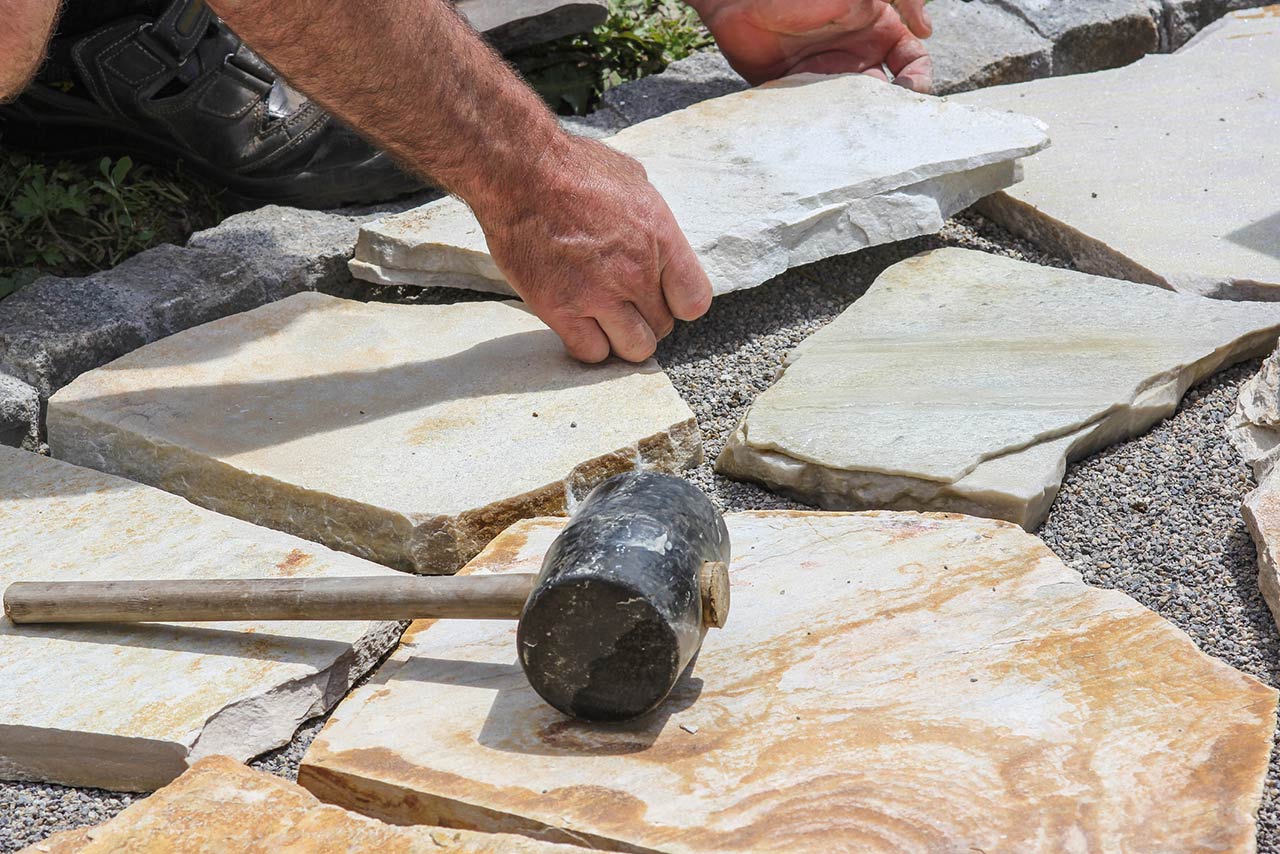
Worker is paving a place in the garden.

Clever Landscaping Ideas for Tiny Front Yards

Worker is paving a place in the garden.

If you’ve got a teeny tiny front yard, you may have already discovered that landscaping can be pretty challenging. Having limited square footage doesn’t mean you should completely ignore this small piece of land – curb appeal is extremely important to the appeal and value of a home, so investing a little time and effort into landscaping the front yard is very important, regardless of its size.

Here are a few creative landscaping ideas for petite front yards to help you come up with a charming landscaping solution for your home.

Plant an Abundance of Flower Patches

There’s always room for flowers, even in the smallest of spaces. Plant a generous row of roses, hydrangea or other flowers of your choice along the street side of your front yard. Not only will it look lovely to those strolling along the sidewalk in front of your home, but it will also provide your property with a certain degree of privacy. Throw in a mini white picket fence to give the flowers something to hang over for added decor.

Take the Patio to the Front

An easy and low-maintenance solution for a diminutive yard is to pave the space with large flagstone and gravel to create a patio area that will require no watering or grass-cutting. Add a couple of chairs and small table and you’ll have the perfect place to enjoy a cup of tea or coffee with a friend while watching the passersby. If you are absolutely missing the greens, you can always throw in a couple of potted plants on top of the flagstone.

Create a Flower-Lined Pathway

Consider adding a pathway leading up to the front door with interlocking stone, lined with low-growing plants and/or flower beds. This will help to emphasize your front door while creating a visually appealing space. Fill the areas on other side of the pathway with grass or river stone.

Plant Dwarf Trees

Small trees added to an equally small front yard can provide a welcoming addition. To really boost the sense of depth to the space, plant the trees on each side of layered stepping stones leading up to the front door of the home. You can scale the look up or down by varying the size of the trees you plant, according to the exact size of your front yard. 

Build a Stacked Stone Retaining Wall

A classic stone wall can help create a more formal and polished look to the front of your home, especially when paired with finely-manicured hedges and bushes. The majesty of the stone wall, there’s really little else needed to complete the look of your landscaping – the wall should suffice all on its own.

Place Planter Boxes Along the Street Side

This is a great idea if your front yard is literally a couple of feet away from the curb. In this case, add a row of planter boxes along the street side and fill them with tall grass and plants that can handle minimal maintenance.

Hang Flower Baskets

Flower baskets that are hung under your front porch add color without taking up valuable ground space in the yard. The great thing about these hanging baskets is that you can change them every year to create a different look each time.

Limited space in the front yard doesn’t mean you need to sacrifice on curb appeal. Follow some of these ideas to create the perfect little oasis in your front yard that’s welcoming and adds extra value to your property.

Selective focus of a Ladybug on a green garden leaf

6 Ways to Make Your Garden More Eco Friendly

Selective focus of a Ladybug on a green garden leaf

A garden is inherently “green” in nature, so how is it possible to make it any more eco-friendly than it already is?

The truth is, there are plenty of ways that a garden can be both wasteful and even harmful. From the pesticides that can be used to all the water spent keeping plants hydrated, some gardens can use a total revamp when it comes to being more friendly to the environment.

Follow these tips to make sure your garden is as green as it can be.

1. Generate Your Own Organic Compost

Good quality soil costs a pretty penny, but creating your own compost can minimize the expenses of nourishing your plants. Not only is composting exactly what your landscaping craves, it’s also incredibly easy. In fact, a lot of the items you’d otherwise toss in the trash can be diverted to your compost instead.

Food scraps like egg shells, coffee grounds and leftover vegetables are perfect additions for homemade compost. And all that landscaping debris that you need to get rid of – including dead leaves and bush trimmings – can be added to your compost instead of discarded with the trash.

Organic compost brings healthy microorganisms that break down to fuel plant growth, prevent plant disease, aerate and moisten the soil, and provide a safer solution to chemical fertilizers. Once you’ve built up your compost, place it in a warm, partly sunny area of your garden, which will help stimulate decomposition of all the items you’ve included.

2. Attract the Right Type of Bugs

While you obviously don’t want to be pestered with mosquitos and other bothersome insects while you’re outdoors enjoying your garden, that doesn’t mean you should scare off all bugs altogether. Certain bugs like beetles, ladybugs and lacewings are helpful in warding off all the potentially harmful bugs that can destroy your plants and flowers.

For instance, ladybirds and lacewings eat black flies. If these particular bugs are a major problem in your garden, add some marigolds and sunflowers to draw the attention of these good bugs to protect your garden.

3. Recycle Your Rainwater

Particularly in drought-sensitive areas like California, conserving as much water as possible is essential. Luckily, there are easy ways to harvest rainwater to minimize excess use.

All that rainwater that winds up in your landscaping can be captured to water your lawn and garden. You can even use this recycled rainwater to wash your cars and polish your windows. Consider adding a barrel to collect rainwater that can be later used to hydrate your landscaping.

When you’re actually designing your garden, consider incorporating elements such as permeable paving and dry creek beds to minimize runoff that wreaks havoc on storm drains and pollutes bodies of water. 

4. Create Shade With Trees and Shrubs

All those trees and shrubs that you plant to beautify your exterior can serve more than one purpose. While they certainly are esthetically appealing, they can also be strategically positioned to provide shade just where you need it the most.

Large trees that spread out and drape over can be placed on the south and west sides of your home where the most intense sun tends to beam down. Planting shrubs adjacent to these exterior walls can also help to keep the temperature comfortable. Trees and shrubs can effectively cut down on the energy needed to cool your home, and inevitably slash the cost of your utility bills.

5. Attract Birds For Plant Protection

Much like certain bugs can add a layer protection to your landscaping, so can many types of birds. Not only can many bugs destroy your garden, so can grubs, snails and slugs. Birds love to prey on these pests, so attracting them to your garden can help add natural protection to your greenery.

Incorporate nesting boxes and bird feeders will help create a more inviting environment for birds, which will get rid of the need to use toxic insecticides that are dangerous both for the environment and for anyone who frolics in your garden.

6. Choose Native Plants

Whatever plants happen to be native in your area, consider adding these breeds to your garden. Whether it’s Mountain Lilacs in California or Coneflowers in Florida, adding native greens to your garden can help cut down on the care and maintenance needed to keep them healthy, since they’re already adapted to the climate and conditions in your area. Not only will this cut down on time and effort on your part, it’ll also reduce the amount of water and fertilizer needed, as well as minimize pest infestation.

Your garden is meant to be a natural space, so make sure it’s as eco-friendly as it can be by incorporating these tips to cut down on waste and chemicals, and even create an inviting habitat for friendly wildlife.

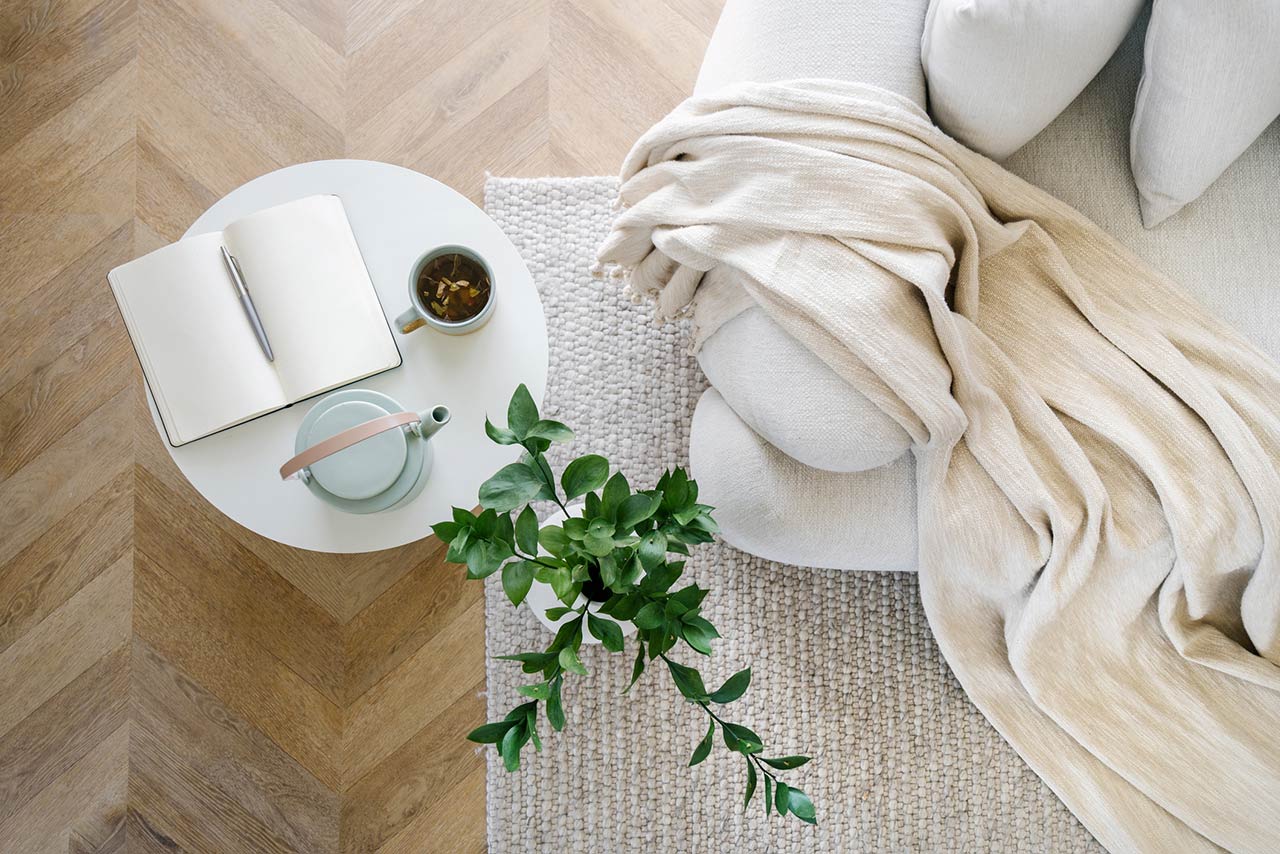
Overhead view of an open book, plant, tea and couch in living room interior design

Creative Ways to Make Your Home Feel More Spacious

Overhead view of an open book, plant, tea and couch in living room interior design

Small spaces certainly pose a set of design challenges, but there are plenty of savvy decor tactics that can be employed to make a room seem larger than it actually is, while keeping it stylish at the same time.

Here are some creative ways to decorate your home to make it appear bigger if it’s short on square footage.

Declutter

Too many knick-knacks in a tight space will make it feel even tighter. Get rid of anything that you haven’t used in over 6 months. You might have an affinity for all your little figurine collections or like to have stacks of magazines available at your discretion, but too much “stuff” in a room will make it feel smaller.

Light Color Floors and Walls

Darker colors tend to be rich and sophisticated, but they don’t often work in large amounts in smaller spaces. Go for lighter colors on your walls and floors so that light is reflected rather than absorbed, creating a sense of more space.

Keep the Flooring Consistent

If your living and dining area are linked, make sure to keep the same flooring throughout. Breaking it up with hardwood in the living room and ceramic tiles in the kitchen will just cut the space in half, which does nothing for visually expanding the space.

Ceiling Height Shelving

Adding a wall bookcase or floating shelves that extend all the way up to the ceiling can help create the illusion of more space. This helps generate a focal point that draws the eyes upward and visually expands the area by pushing the ceiling and walls out.

Multi-Functional Furniture

A small room obviously doesn’t have the luxury of housing a variety of furniture. As such, try to find pieces that serve double-duty. For instance, an ottoman that also acts as a coffee table can serve more than one purpose without having to outfit your room with two separate pieces that will take up extra space.

Scale Down Your Furniture

Furniture that’s sleeker and less bulky will make the room look larger.  Instead of a puffy sofa with a skirt, for instance, a thinner sofa with exposed legs that offers the same amount of seating is perfect for a smaller room.

Lots of Mirrors

Mirrors obviously have reflective properties, which can be harnessed to reflect light all around a room and make it seem bigger. Hang your mirrors across from windows or lights so that they can more effectively allow the light to bounce off them and illuminate the surrounding space.

‘Float’ Your Furniture

If the space permits, try pulling your furniture away from the walls a few inches. Lining up your sofas and chairs against the walls will only make the room seem tight.

Natural Lighting

The less obstructed your windows are, the more natural light will be allowed in. If you want some privacy, you can always hang blinds that can be drawn up when not required. These offer more versatility compared to curtains, which tend to make the room feel cramped.

Color With Consistency

Creating harmony in a space can be done by using two different shades of the same color. For instance, a leather sofa can be effectively paired with off-white throw pillows to create coherence and make a room feel much more open and airy.

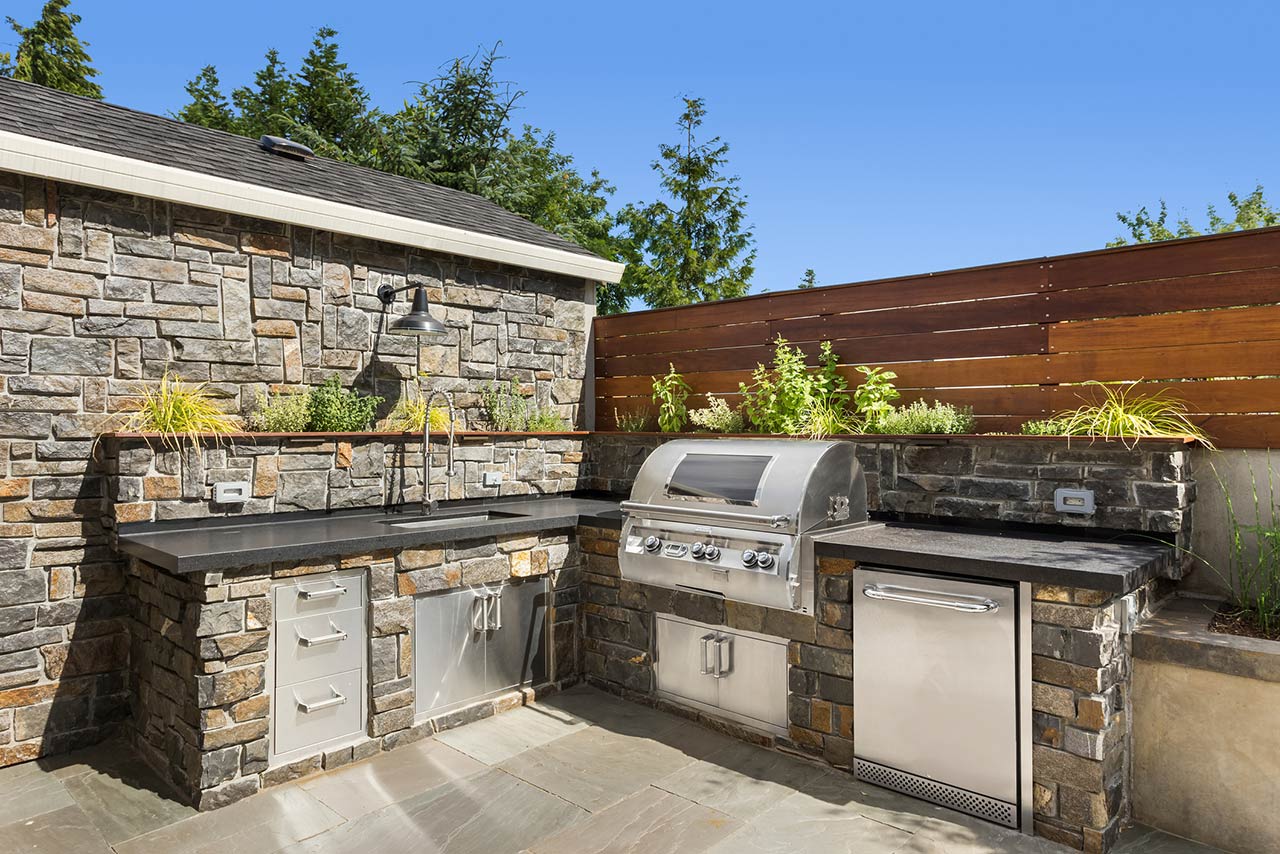
Backyard hardscape entertainment area with built-in kitchen

Grilling Out This Summer? Here’s How To Update Your Backyard

Backyard hardscape entertainment area with built-in kitchen

As the weather heats up, homeowners almost always gravitate toward their back yards, inviting friends and family over for cookouts and holiday parties. If you’re lucky, you’ve created an oasis that makes gatherings more enjoyable. Even if you don’t have the nicest back yard in town, you can add little touches that will make your get-togethers more fun for everyone.

Outdoor Kitchen

If you’re tired of traipsing food from your kitchen to the grill and back again all summer, an outdoor kitchen is a great option. You can make it as elaborate or as simple as you’d like, from food prep counters and barstools to outdoor sinks and refrigerators. You don’t have to limit yourself to what you can throw on the grill, either. Brick ovens open up your outdoor cooking possibilities to pizzas, bread, vegetables, and desserts.

Tiki Bar

Tiki bars have become more affordable than ever in recent years, with homeowners realizing what a great addition they make to outdoor areas. You can set up your bar by a pool, on a patio, or in the middle of your back yard and instantly start serving drinks to your guests. Not only does a tiki bar offer a convenient place to mix drinks, it adds a tropical island feel to your back yard.

Outdoor Shower

Outdoor showers and baths have evolved in recent years. Once reserved for encouraging cleanliness around pool areas, these bathing areas can be set up to provide a private shower or bath in your own back yard. If you live near the beach or on a lake, these bathing areas can also have the added benefit of keeping sand and mud out of your home.

Hot Tub

If you can’t afford a pool, a hot tub may be a more reasonable option. While hot tubs usually cost thousands of dollars, they’re still far cheaper than an in-ground pool and they can be installed within days of purchase. Instead of lounging around the pool with all of your friends, you can gather in the hot tub to relax. When friends aren’t around, you can use the hot tub whenever you need to relax and unwind after a tough week.

If you kick off the summer with a small back yard upgrade, you’ll make your back yard more enjoyable. Friends and family will enjoy visiting and your own family will be able to get out of the house and spend time together, rather than sitting on the sofa, staring at the TV during the warmest months of the year.

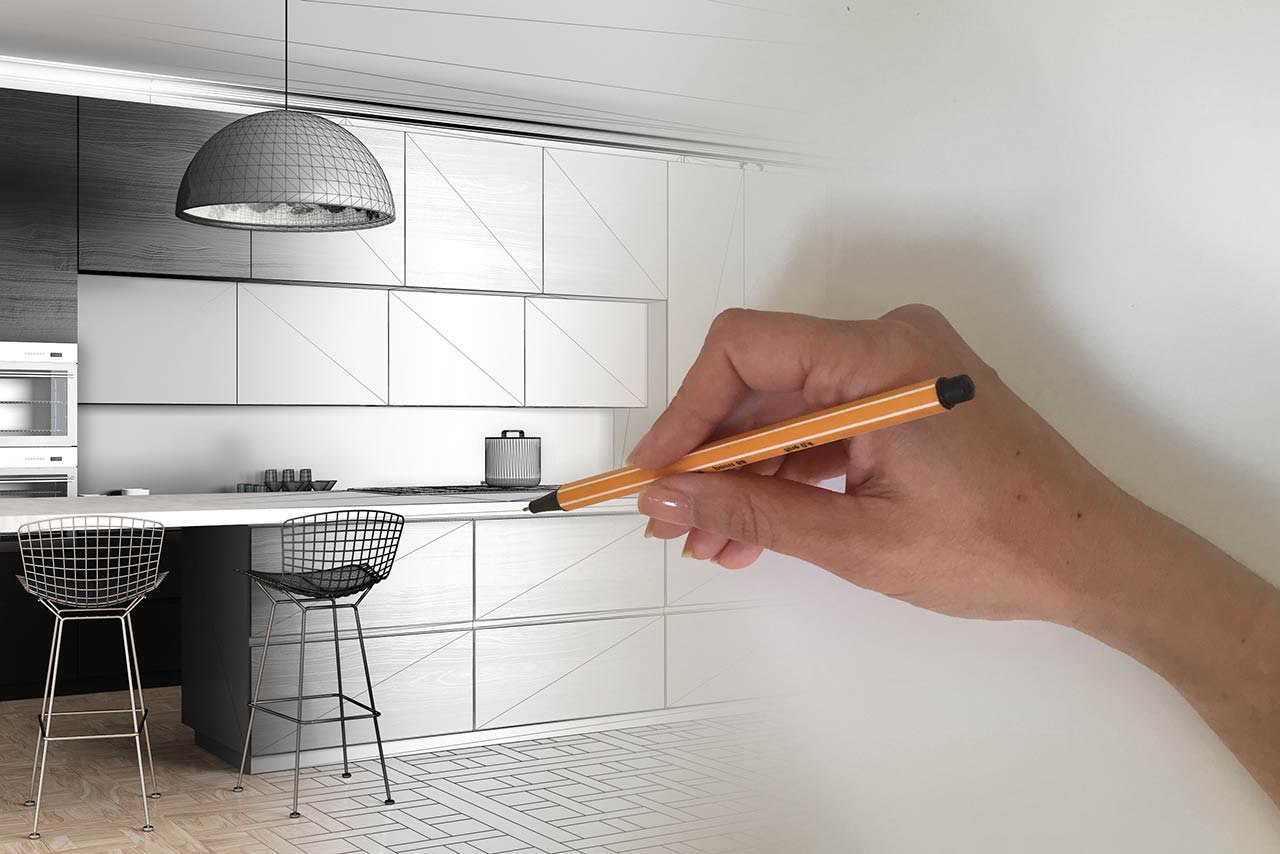
Hand drawing of an interior design project of a modern kitchen

9 Kitchen Design Mistakes to Avoid

Hand drawing of an interior design project of a modern kitchen

No matter how amazing and comfortable the rest of your home may be, there’s something about the kitchen that has everyone congregating to it. No doubt, your kitchen is the hardest working space your home, and should be designed to help make it as efficient as possible. And considering how much of an effect the kitchen has on the overall value of your property, you’d be well advised to make sure its design and style are carefully considered.

After flipping through countless home interior magazines and navigating through Houzz and Pinterest, you’ve probably got a solid idea of what you want your new kitchen to look like. But before you start the process, you’ve got to have a detailed plan in place, which includes things that need to be done, as well as things that you absolutely must avoid.

Here are a few kitchen design mistakes to steer clear of.

1. Not Planning For Adequate Storage Space

Unless you plan on leaving all your pots, pans, dishes and glassware on the counter (which you shouldn’t), you’re going to need to seriously think about adding enough storage to keep all of your kitchen belongings out of sight. And don’t forget about your dry foods and knickknacks that will also need to have a home. Whether your storage takes the form of extras drawers, pantries, or cabinets, you need to be certain that it is adequate enough to tuck everything neatly without having to cram everything into a tight space.

2. Not Including Enough Counter Space

The amount of space that you’ve got on your countertops is equally as important as your storage space. After all, it’s where you’ll be prepping your meals and housing small appliances like your blender, toaster, and coffee machine. And don’ forget about any decorative elements that you may want to have out on your counter to boost the style factor of the room. Without adequate space on your countertops, you’ll find your kitchen will become cluttered really quickly and easily.

3. Skimping on Lighting

If you want to clearly see what you’re doing as you’re preparing dinner, you’re going to need excellent lighting in the kitchen. But many homeowners skimp on lighting in this space for some reason, and often leave it to one solitary central light fixture to provide the lighting needed. Instead, the lighting in your kitchen should be varied, and include both task lighting and fixtures meant specifically for creating ambience.

Consider illuminating the overall space with pot lights, and install pendant lights over your kitchen island. You may also want to install undercabinet lighting to illuminate your counter as you handle food, and hang a chandelier over the dinner table. Layering your lighting in this fashion can provide with both the right amount of lighting needed to whip up your famous dish, while giving you the flexibility to create a specific atmosphere in the space.

4. Lacking Proper Ventilation

All those fumes from your boiled eggs or grilled salmon have to go somewhere, or else you’ll be left with unpleasant smells that will linger for hours. Not only that, but if you have a gas stove, these fumes can go from unpleasant to downright dangerous. That’s where proper ventilation comes into play, which is a critical component to consider in the planning stages of a kitchen design. Not only will an adequate ventilation system help keep the air in your kitchen fresh, it’ll also help to lengthen the lifespan of your appliances. 

5. Forgetting About the ‘Kitchen Triangle’

It would be pretty awkward and annoying to have to dodge obstacles to bring food items from your fridge to your stovetop. That’s why the kitchen triangle should always be kept in check during a kitchen design. This layout basically links the three most used areas of the kitchen: the stove, fridge, and sink.

Out of all these components, the sink, in particular, is most often used, and should have direct access to both the fridge and stove. Tight walkways, cabinet doors that swing open the wrong way, and improperly situated islands can mess this system up big time. Straying from the kitchen triangle too much can make the room must less efficient.

6. Misjudging the Island

Having an island in the kitchen can offer you additional counter space and an added spot to eat and hang out. But your kitchen’s size and layout will dictate the size and location of an island, as well as whether or not one can even effectively exist. The kitchen is a working space, so anything that gets in the way of functional flow will just cause problems.

If the island is too big, or is not located in an ideal spot, you’ll cut off proper flow in and around the space. Ideally, there should be between 42 and 48 inches of open area surrounding kitchen islands. For it to be of any use, the island should be at least three by five feet in dimension, and your kitchen should be a minimum of 13 feet wide.

7. Going Too Trendy

Unless you’re planning on revamping your kitchen every few years, you’d be better off sticking to a design that’s not overly trendy. While you still want to be modern and innovative, you also don’t want to be so quirky that the appeal of your kitchen will wear off you in the near future.

Rose Quartz and Serenity might be Pantone’s choice of colors of the year, but how long these pastel hues stay on trend in the next few years is up for debate. No one says you can’t be bold in your color choices, but just be sure to use them in non-permanent ways, such as with your towels or decorative accessories.

And when it comes to kitchen design, carefully consider the styles you choose for your trim, cabinet materials, finishes, countertops, and flooring. You might think you’re certain that the latest out-there trends will tickle your fancy for the long-term, but you never know when your tastes will change, or if you ever plan on selling your home in the near future to buyers that may not necessarily have the same tastes.

8. Forgetting About the Trash

Your kitchen design can be sleek and impressive, but the look of this space can easily be thrown off with the presence of a trash can. Nothing is more off-putting than the sight of garbage, so be sure that you consider a spot where you garbage bin can be tucked away in a spot that’s easy to access.

Not only is the spot for a trash can up for consideration, so is a bin for your recyclables. One modern way that interior designers and homeowners are tackling this issue is by installing a dual cabinet pull-out that features one bin for the trash, and another for the recyclables. This offers easier access, rather than having to reach under the cabinet and hoping that your toss made the bin. 

9. Not Including Enough Electrical Outlets

Think about all the little appliances that you’ll be using in the kitchen at various stations. From your toaster, to the cake mixer, to the blender, all these items need an outlet to be plugged into. And what about your smartphone and tablet? Odds are the kitchen counter will be the place to recharge these gadgets. For that reason, make sure you’ve installed enough outlets to accommodate all the things that will need to be plugged in.

Spending the time considering all these factors in the planning stages can help save you plenty of hassles after the fact. Make sure you’ve considered all the components that go into making a kitchen great, and avoid all these mistakes that can wreak havoc on your kitchen design.

Happy middle aged couple meeting loan advisor to buy a new home

Don’t Assume Your Home Will Sell Itself Just Because it’s a Sellers Market

Happy middle aged couple meeting loan advisor to buy a new home

It’s still high season for sellers out there in the world of real estate. If you just listed your home, you’re probably feeling very confident that your house will garner plenty of attention and sell shortly, right?

While it’s definitely highly possible that your home is ripe for the picking, it’s generally not recommended to just sit back, relax and assume that the home will just ‘sell itself’ just because the market is hot right now. There are actually things you might be doing – and not doing – that could botch the sale of your home.

When properties are on the move and your home isn’t getting much action within the first two weeks of hitting the market, home buyer hopefuls will start to think that there’s something wrong with your house, and assume that they’re in a better negotiating position or blow the home off altogether.

If you’ve got your home on the market, don’t just plop a For Sale sign on the front lawn and walk away. The best real estate agents in the country have a few suggestions for you to set your home listing up so that it’s plucked off the market sooner rather than later.

The Price Point of Your Home Can Make All the Difference

One of the most important factors to consider when selling your home is how much to list it for. Price it too low, and you could leave a bunch of money on the table. Price it too high and you could scare off buyers who otherwise would have put in an offer on your home.

Unfortunately, many home sellers get caught up on the dollar signs they see, thinking that the higher they list their home for, the more money they’ll make on the sale. The truth is, this mentality doesn’t always allow things to pan out the way they should.

Once the home lingers on the market after two or three weeks, it starts to get stale. At that point, you’ll wind up having to slash the price anyway. During that time you wasted with a higher-than-called for listing price, you could have had a completed sale and saved yourself a lot of money on carrying costs.

It’s imperative to price your home appropriately for your local market, and the best way to do that is to get your real estate agent to pull a list of comps in the neighborhood. A properly priced home will almost always sell faster than one that’s way over-priced.

Don’t Underestimate the Power of Staging

Even in a seller’s market where demand is high, you’re home won’t automatically sell itself if it isn’t presented in the best light possible. A nicely renovated home is great and all, but if it’s empty or not furnished nicely, it could be a turn off to buyers.

Professional home staging paints your home in its best light, and helps buyers get a clear visual of its highest and best use. People want to be able to see themselves living in the home, so the better able you are to paint that picture, the better the odds are of someone putting in an offer.

It’s estimated that two-thirds of home buyer hopefuls need some help visualizing themselves in your home, so it’s up to you to give them a little assistance in this department.

Don’t Ignore Your Home’s Exterior

Many sellers place a ton of emphasis on the interior of their homes without putting the same amount of importance in the outside. The truth is, it’s the curb appeal of your home that will make a good first impression on buyers. You don’t want to lose a buyer’s interest before they even step foot through the front door.

Make sure that your grass is cut, shrubs are trimmed, flowers are tended to, and any clutter is eliminated. Your front door should be void of cracking or peeling paint, and your front porch should be void of dead leaves and other debris.

And a nice “welcome” mat wouldn’t hurt either.

Don’t Work Alone

Your secret weapon in the entire sale of your home is working with a good, experience real estate agent. He or she will be your guide and counselor throughout the entire process. You’ll get the best advice and suggestions about what needs to be done to sell your home quickly, even if you think it’s the best house on the street. 

The takeaway from this is that there’s work involved in selling a home, even if your pad is impeccable and the market is a hot one. Make sure you do your due diligence and your research in the process, and team up with a realtor who is well-versed in the market in your area. Last but not least, remain humble, and don’t just assume your home will sell itself.

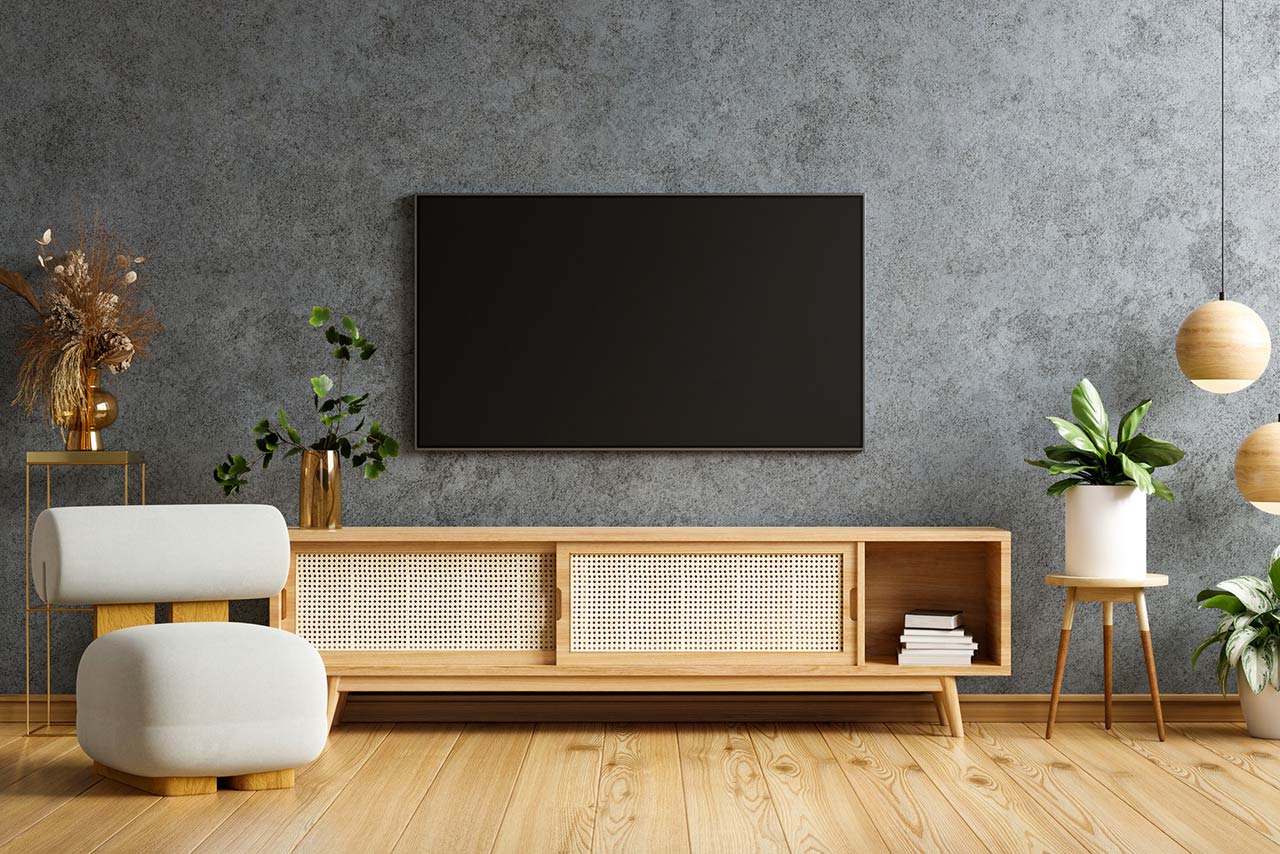
TV and wooden cabinet with gray armchair in modern living room the concrete wall

Tips for Hiding TV Cords in Your Home

TV and wooden cabinet with gray armchair in modern living room the concrete wall

The average American household now has 2.5 TV sets, even when the number of people in that home is only two. Not only is there a TV set in the main living area, but many families have TVs in children’s bedrooms and even kitchens and bathrooms. Television sets can now be mounted on walls, keeping them off furniture, but that leaves households with a new dilemma: how to keep power cables from showing.

Fortunately, there are several options for concealing your cables from view. They each come with their own challenges, with some less expensive than others. Here are three of the most popular options, from most expensive to least.

Move the Power Box

If your cable TV hasn’t yet been installed, the installer should be able to place the cable outlet in the area where you’ll be mounting the TV. If a cable outlet is already in place, consider contacting the cable company to handle it for you. For the power outlet, you’ll likely need to hire an electrician to move the power outlet to its new location, unless you’re comfortable taking on the project yourself. Option 1 is the most expensive option if you choose to bring in a professional to help.

For do-it-yourselfers, read the steps carefully before beginning your power outlet move to avoid injury. You’ll need to turn off the circuit breaker to that outlet before you begin working and decide where you want the outlet to be located before starting your work. You can also move the cable outlet yourself or run a new one if a line isn’t already in place in that room.

Hide Inside the Wall

Instead of moving your outlets, you could run the cables through the wall. This involves cutting a hole in the drywall behind the TV and feeding the cables through, then dropping them toward the floor. If you’re installing the TV on an interior wall without insulation, you’ll be able to easily drop it. Your drop can also be made easier by using fish tape, as demonstrated here.

You’ll need to cut a hole closer to the floor to run the cable through to get power. Unless you’re sure you can make this setup attractive, you may want to have a plan in place to cover up the outlet, such as placing a cabinet or entertainment center below.

Use a Cord Keeper

One of the easiest ways to conceal your cords is to use a cord keeper. Available for less than $20, cord keepers are designed to blend with your wall. While the keeper itself protrudes from the wall, it is far less unsightly than dark cords running from your TV to the power outlet.

If you plan to use a cord keeper, consider hanging your TV on a corner. The protrusion looks less obvious when it runs along a corner, since that area of the room is already recessed anyway. Cord keepers are generally white, so plan to paint them to match the color of your walls.

If you’re one of the many households that choose to hang your TVs, cord management is a must. With a little planning and a do-it-yourself attitude, you can hide your cords without spending a fortune.

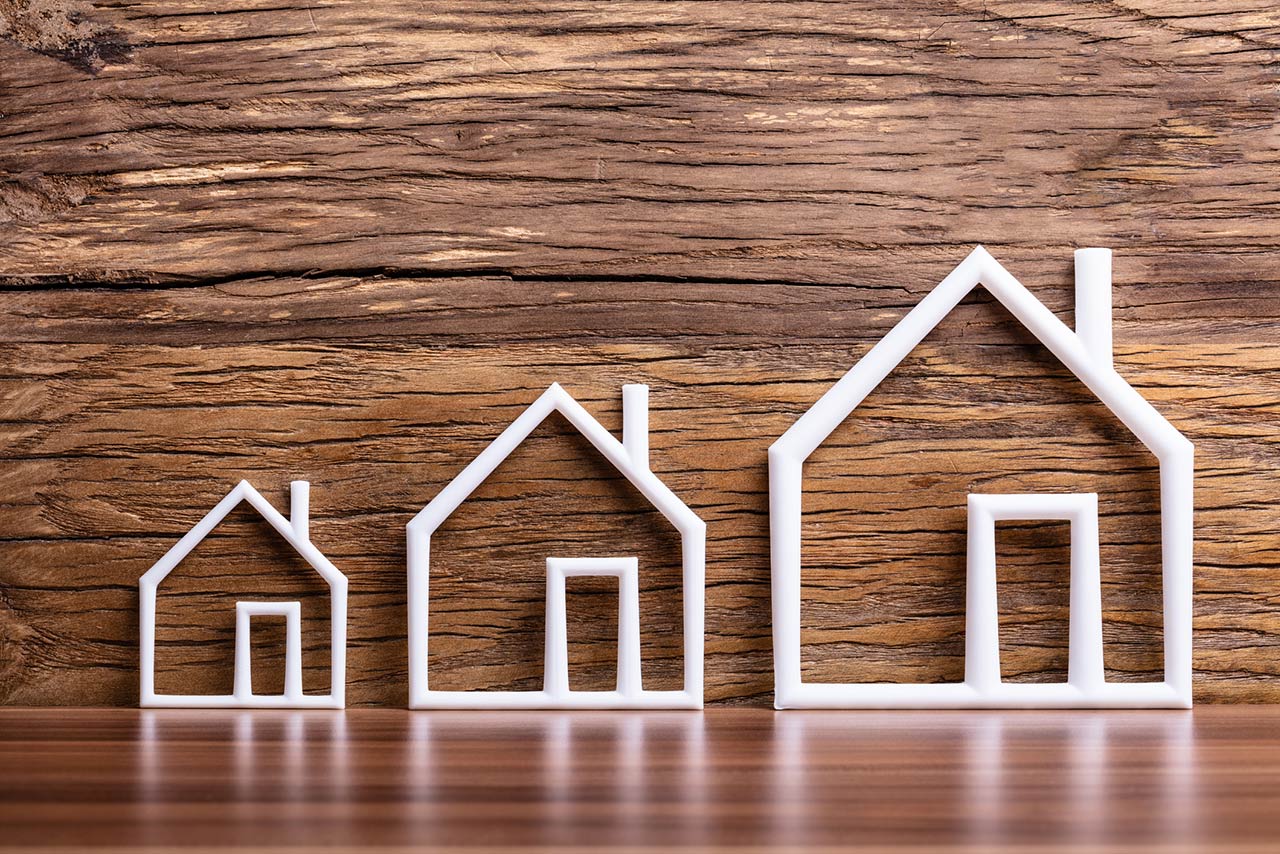
Increasing White Outlined Houses Against Rustic Background

Big Questions to Ask Yourself Before Buying a Small House

Increasing White Outlined Houses Against Rustic Background

Small houses offer the promise of a simpler life with less material possessions, less maintenance, and a lower mortgage. Despite the benefits there are some tradeoffs that warrant consideration. Before taking the plunge, it’s definitely worth thinking about the pros and cons of going small in the world of real estate.

Here are some big questions you should ask yourself when it comes to buying a tiny house.

How Often Do You Entertain Guests?

Having one or two friends over at a time is one thing, but hosting a large dinner party with 10+ guests might not exactly be comfortable – or even possible – if your living quarters are short on square footage. Unless you plan on entertaining guests in the backyard, having more than a handful of people over at once won’t be practical. If you like things small and quiet, great. Although if you’re the type to throw big bashes, you might want to consider going a little bigger in the housing department.

If You Have Pets, How Well Can You Coexist?

If you’ve got any pets, or plan on getting one in the near future, consider the fact that they’ll have to put up with minimal indoor space. A small house is fine for a cat who only makes use of a litter box, sofa, and kitchen. A larger, more active dog, on the other hand, might find it tougher to coexist and be happy in a small space.

Are You an Avid Collector of Things?

Living in a small house means keeping a lid on the amount of belongings you’re able to accumulate. If you have a large collection of items, you might have to scale down if you’re considering moving into a tiny home. In addition, if there are any sentimental items like passed down family furniture, the likelihood of all your belongings fitting decreases.

For instance, if there’s an oversized hutch that’s been in your family for generations that you simply cannot part with, will it fit neatly in your home? Or will it not even fit through the doorway?

Are You Prepared to Spend More Time Outside?

Living small usually means spending a lot more time outside. One of the things about small homes is that a lot more living tends to take place outdoors. If home is just a place for you to lay your head between work and life, a lot of space probably isn’t necessary. And if you’re a big outdoorsy kind of person, a tiny space may be all that you need. However, if you’re home-body and home is where most of your time is spent doing the things you love, you’ll probably need more space.

What Are Your Hobbies?

Certain hobbies obviously take up a lot more space than others. In a small house, that might be space you can’t afford. If you love drawing, paining, knitting or cooking, a small house shouldn’t pose a problem. On the other hand, if you have an affinity for pottery, woodworking or shooting videos, a tiny house might be an issue. Consider if a small house would make your hobby more difficult to participate in, and decide if you’re OK with that in favor of less space (and most likely a smaller mortgage).

How Good Are You at Sharing Your Space?

Will you be living alone or sharing the space with someone? If you live with others (or plan to in the future), consider how well you’ll be able to share your space. If you grew up in a big family with minimal room indoors, you probably won’t have any issues. Horrible memories from bad dorm experiences? Then take a moment to reconsider.

There’s a certain charm and freedom associated with tiny homes. And of course, there’s always the much cheaper price tag (depending on the location). There’s a lot to think about and weigh before making this decision. Regardless of whether the home you buy is big or small, this type of purchase is an important one. Do some soul searching, and as always, discuss your options with an experienced real estate agent before you make the next move.