Bad Signs to Look For Before Buying a Home

Buying a home is a big commitment, so you obviously want to make sure that your purchase is a sound one. That’s the reason why you might go back a second time – or even a third – before putting in an offer, then maybe even return once or twice more before sealing the deal. You want to make sure the home and the surrounding neighborhood justify the money you’re spending on the property.

When you’re scoping out homes, you might have some items on your must-have list that you’ll be keeping an eye out for. But there are also some negative things that you should look out for that may be signs that the home or the neighborhood is not up to par, including the following.

Cracks in the Exterior
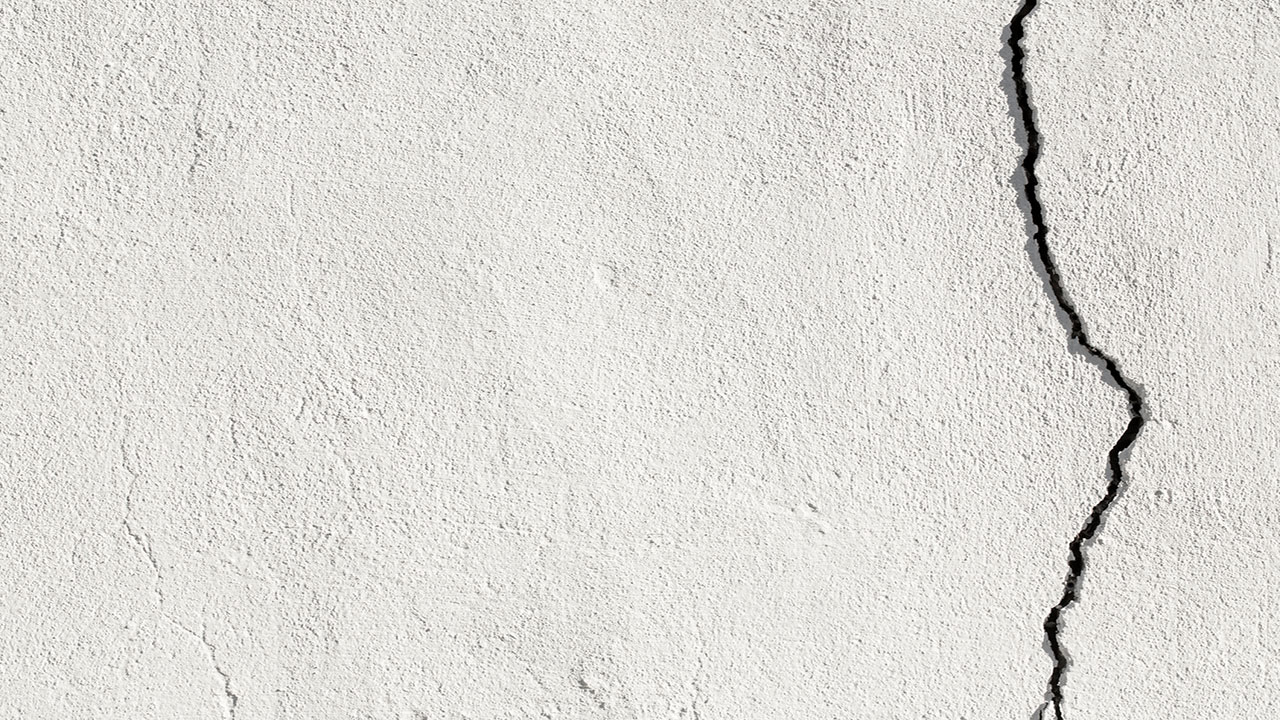
While fine cracks in the foundation wall might be OK, large ones that are at least a half-inch wide or are uneven might be cause for concern. Out of all issues with a home that can be the most cumbersome and expensive to fix, structural issues would be it.

If you notice any large cracks, that might be a red flag that the foundation is faulty. This could be a result of shifting or sinking soil underneath, grading issues, or other reasons. You may want to call in a structural engineer to check out the cracks to make sure there’s no serious underlying issue with the structure or foundation that will end up costing you a lot more than what you had intended to spend.

Paint Covering Up Water Damage

Some homeowners may try to conceal any water damage done to their ceilings or walls by painting over it. What homeowners might not know is not only are they not fully covering up the damage, they may also be allowing mold to fester, which can become a health hazard.

Pay close attention to any uneven patches of paint. If it seems as though certain areas were painted over, take a closer look. There just may be signs of water damage underneath.

Lots of Room Fresheners and Scented Candles

While it’s perfectly fine to freshen up the smell in a home when it’s on the market – and even recommended – overdoing it with the fresh smells might be a cover-up for something lurking. Find out if there is something that may be releasing a foul odor in the home, such as mold, pet urine, sewage, or a leaky pipe.

No Permits For Improvements Made

If it’s obvious that some work was done on the home – such as a room addition or a new deck, for instance – ask to see the permits for the work done. If the seller can’t produce them, the work may have been done without a permit. This could spell trouble for you if the building inspector in your area catches wind of the work done.

If that happens, you’ll need to not only pay for the permit yourself but even possibly go through the motions of having to apply for it and get it approved. The inspector could even go so far as to force you to take down whatever work was done.

Uneven Floors
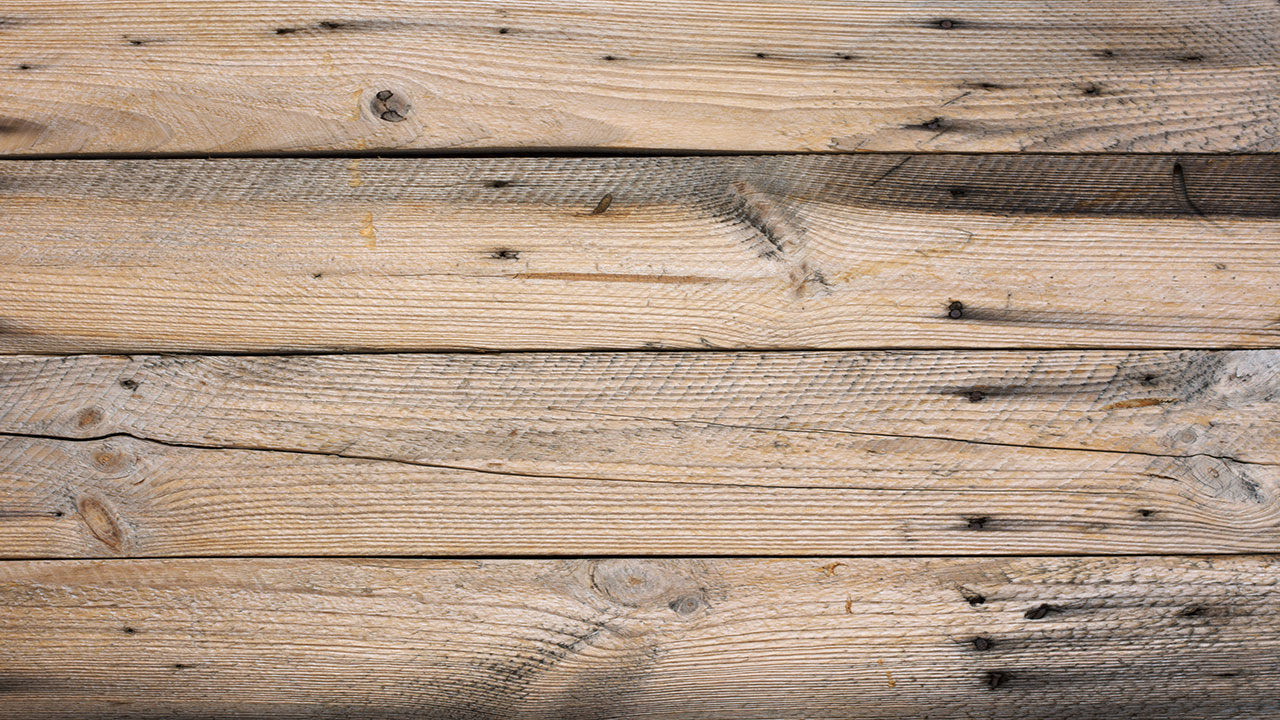
Floors that are obviously uneven could be a sign of structural issues. As already mentioned, this can be a costly problem to fix. In addition to floors that are not level, look for doors and windows that stick when you try to open and close them or bubbling on the floors. 

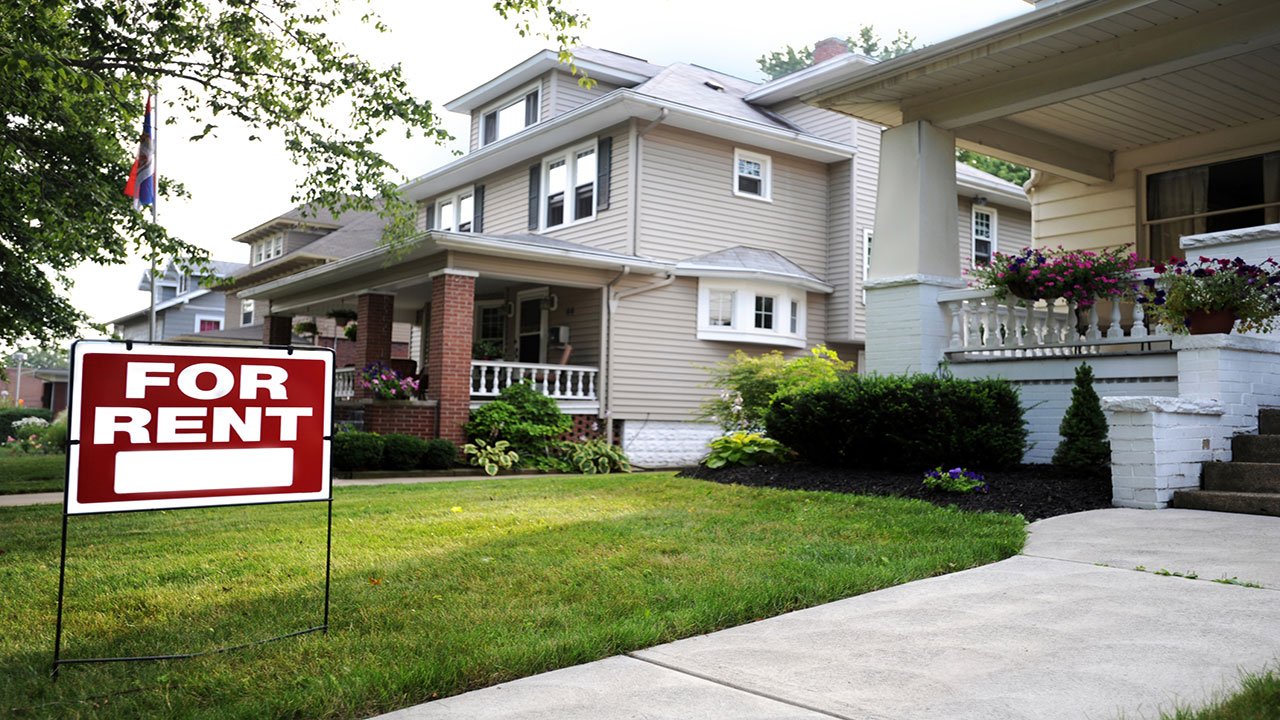
Lots of For Sale Signs

So far, we’ve been talking about the home itself. But in reality, you’re buying into the neighborhood, too. As far as the area itself is concerned, there are a few things to look for, and one of them is an overabundance of For Sale signs. If you notice that there are plenty of homes for sale in the area or on your street, find out why.

While it may just be that the demographics are changing – such as empty nesters downsizing and making room for younger families – there could be more serious issues at the hub of all the for sale signs. Tanking property values or an increase in crime are issues you’ll definitely want to know about before you put an offer on a home.

Plenty of Empty Storefronts

Like the For Sale signs on residential properties, too many vacancies in commercial units could also be a sign that a particular neighborhood is not doing so well. Bustling businesses is a good sign in neighborhoods, but entities that are either going out of business or are bailing on the area for a better one is not a good sign of a healthy neighborhood.

All the Homes Look the Same

If you’re considering buying in an HOA community, take a look at how uniform all the houses are. While HOAs typically have restrictions about what homeowners can do to their exteriors, too much uniformity might be a sign that there is little wiggle room to deck out your home the way you’d like to.

Music is Playing in All Rooms
Having music played during showings or open houses might be fine, but it could also be used to mask any noise pollution in the area, such as a nearby train, planes flying overhead, or the neighbor’s dog barking.

Neighbors’ Homes Are Poorly Maintained

Speaking of the neighbors, look at how they maintain their properties. If they’re unkempt, that could affect the value of the property you intend to buy.

The Bottom Line

Buying a house is a big deal, so make sure you take your time scoping out different properties and the neighborhoods they’re located in before you make an offer. There’s a lot of money at stake, so you want to make sure that the house and the area you buy into are exactly what you’re hoping for without any unpleasant surprises down the line.


INFOGRAPHIC: Median Home Prices Across California

How to Help Your Adult Children Buy a House

With the price of homes as expensive as they are these days, it can be tough for anyone to get into the housing market. Young adults who are just venturing out of their parents’ homes in hopes of getting a place of their own typically face sky-high real estate prices. And those who are graduating college typically have a huge student debt loan to pay off on top of all other living expenses.

It can be a big challenge to save up enough money for a down payment on a home, let alone all the closing costs associated with buying a house, the furniture needed to outfit the place, and the ongoing operating fees.

Let’s face it: being financially capable of buying a home when moving out of a parent’s home can be a major financial feat.

In many cases, young adults need their parents’ help to secure a home and a mortgage. Doing so can give them a big head start in life. An increase in housing prices and mounting student loan debt can be major obstacles that parents can help overcome.

But how can parents help their grown children buy a home when they’re trying to juggle their own mortgage and daily expenses? Of course, helping adult children buy a house is no simple feat. You’ll definitely want to carefully plan your strategy to assist your kids when they’re ready to fly the coop.

Here are some suggestions to follow to help your kids get into the housing market.

Buy a Home and Let Your Child Rent it From You

Many young adults end up renting when they leave their parents’ homes simply because they do not have the financial resources or credit history to secure or afford a mortgage. But rather than them paying rent to a stranger, they can rent from you instead.

If your current finances permit, consider buying a home for your child in your name and renting it out to them. While this is certainly a huge financial undertaking for you, you may be eligible to deduct your mortgage interest, property taxes, repairs, and certain home improvements come tax time on your “rental” property. Plus, the rent that your child pays you can cover the mortgage.

Buy a Home Together

If your adult child is working and has some level of credit established, consider buying the home together. Two working parties should have an easier time securing a mortgage for a home than a single working individual. If you take this route, you’d each share a certain stake in the home, depending on how you divide the equity. 

If at some point, your child is ready to take over the house on their own, you’d sell them the share that you had in it. Just make sure that your child is financially capable of holding up their end of the bargain in terms of paying their share of the mortgage and all other operating expenses.

Co-Sign the Loan

Your adult child might have a steady job and the money to comfortably cover the mortgage as well as a hefty down payment, but that doesn’t necessarily guarantee mortgage approval. Lenders will want to check out their credit history, and if your child doesn’t have any credit built up yet – or has bad credit – it might be tough or even impossible to secure a mortgage.

If that’s the case, you may have the option to co-sign on the loan. In this situation, you would sign your name on the mortgage along with your child’s. As a co-signer, you would be responsible for making the mortgage payments in the event that your child defaults on the loan.

You’ll want to make sure that your child is responsible enough to make the payments on time and in full every month and that you have the finances available in case you ever have to step in to take over the home loan.

Cover Closing Costs

On average, buyers spend about 2% to 5% of the purchase price of their home in closing costs. This can amount to a hefty bill. If you can afford it, consider helping your child come up with the money needed to cover these costs, which typically includes appraisal fees, mortgage application fees, home inspections, homeowner’s insurance, and property taxes.

Give a Down Payment as a Gift

If you have access to cash – or have sources that will allow you to liquidate your money – consider gifting your child the down payment for a new home.

According to the National Association of Realtors, nearly one-quarter of millennials used a monetary gift from their family or friends as part of their down payment.

But giving your child money to cover their down payment is not as clear-cut as handing them a wad of cash. There are rules that need to be followed in order to provide a paper trail proving that the money being provided is indeed a gift to be used towards a down payment and not a loan. Such rules may vary from one lender or mortgage product to the next.

If the money being provided is classified as a loan, your child will have to pay taxes on it. On the other hand, taxes on gift money can be deferred up to $15,000 per child (or $30,000 for couples gifting their adult children). Be sure to speak with a tax specialist to determine whether or not any taxes apply in your situation.

Ideally, the gift should be made at least a couple of months in advance of the mortgage application. There might also be some paperwork to sign verifying that the money is a gift and does not need to be paid back.

The Bottom Line

If you can swing it financially, you’d be doing your adult children a huge favor by helping them out when it comes time to buy their first home. While renting is always an option, buying and owning property comes with its own unique benefits. Getting into the market sooner rather than later can help your children start building equity and can even help them establish strong credit with every mortgage payment they make.

What California Homeowners Should Know About Earthquake Insurance

Earthquakes can have devastating effects. And considering the fact that there are fault lines throughout the Golden State, this west coast state is prone to earthquakes more than most other states in the US.

You already have homeowner’s insurance (or at least you should), but should you take out an extra policy to protect against damage caused by earthquakes? Before you do, be sure to consider everything about these types of policies.

Earthquake Insurance Isn’t Mandatory

Homeowner’s insurance is required if you plan to take out a mortgage on a home. Lenders want to make sure a home is insurable before they extend a loan. But not every homeowner necessarily needs earthquake insurance. Depending on where you live, earthquakes might be a rarity, while they may be more commonplace in other parts.

Only you can decide whether or not you should get earthquake insurance, as it’s not a mandatory type of coverage that homeowners are required to take out. That said, California is one of the states in the US that is prone to earthquakes – especially along fault lines – so it’s something that may be worth considering.

Coverage Required Depends on Several Components

The amount of earthquake insurance that you take out will depend on certain things, such as the value of your home, the cost to rebuild it, and the value of your personal possessions. Consider the value of everything that may be at risk when determining how much insurance to take out.

Coverage is Expensive

Insurance itself is not exactly cheap. But earthquake insurance, in particular, is quite expensive compared to standard policies. And the cost of coverage becomes even more expensive in earthquake-prone regions. You can expect to pay an average of $3.50 per $1,000 of coverage in California. So, for a home that’s worth $500,000, the annual premium would be $1,750.

Several Factors Influence Rates

The above figure is an average ballpark amount you can expect to pay. But the actual cost of your policy depends not only on the value of your home and the cost to rebuild it, but also the following:

  • ZIP code
  • Proximity to fault lines
  • Age of the home
  • Number of stories
  • Building materials used
  • Soil type

Deductibles Need to Be Paid First

Just like any other type of insurance policy, a deductible will need to be paid when you file a claim. The amount of your deductible will sometimes depend on what you decided on when you first took out your policy, if your insurance provider allows you to choose. For instance, you may have chosen a higher deductible amount in exchange for a lower annual premium. Or else, a lower deductible amount will mean a higher premium.

Otherwise, many insurance companies offer set deductibles based on the overall policy limit, usually somewhere in the range of 15%. That means that if you file a claim for a $300,000 policy, you would have to pay a deductible of $45,000.

Consider what your deductible is and the extent of the damage done to your home as a result of an earthquake before you decide to file a claim. If the damage done is minimal, it might not be worth paying the deductible and seeing your premiums increase as a result. On the other hand, extensive damage will likely be worth tapping into the policy you took out to protect your finances in the event of an earthquake.

Possessions Are Covered to a Set Amount

With earthquake coverage, your personal belongings are generally covered up to a set dollar figure. Let’s say your limit is $5,000, which would be fine if the damage done to your possessions doesn’t amount to any more than that.

But this can be a bit of an issue if expensive entertainment systems, electronics, and other high-ticket valuables that are valued much higher than $5,000 are broken. If you have a lot of valuable goods in your home, consider taking out more coverage for contents.

Exclusions May Exist

Not everything will necessarily be covered in an earthquake insurance policy. Certain things may be excluded, so you’d be well advised to find out what is and is not included in your policy when you take one out.

Examples of things that an earthquake policy may cover include:

  • Repairs to your home and any attached structures
  • Furniture
  • Clothing
  • Additional living expenses if your home is uninhabitable

Things that an earthquake policy probably won’t cover include:

  • Fences
  • Pools
  • Separate structures
  • Vehicles
  • Fine china and other delicates
  • Masonry
  • Sinkholes
  • Fires caused by an earthquake
  • Floods caused by an earthquake

Discounts Exist For Retrofitted Homes

If you’ve taken precautions to ward against damage caused by earthquakes, you may be eligible for a discount on your policy. For example, bolting down appliances, securing the home to the foundation, and bracing interior walls can all help to keep the structure standing despite an earthquake. Whatever you do to solidify your home’s structure, you can reap the rewards with a lower premium.

The Bottom Line

Earthquake insurance is by no means required. But considering the state in which you live, it might be a viable policy to think about. That said, the expenses need to be considered, as does the type of coverage that you’ll get. Be sure to speak with an insurance provider and ask plenty of questions about these types of policies before you take one out.

Budget-Friendly Ways to Boost Curb Appeal

If you want to attract buyers to your listing, staging it is a great way to start. Obviously, the interior of your home needs to be show-stopping, but so does the exterior. In fact, curb appeal plays a key role in how quickly your home will sell.

Consider this: buyers will first see the outside of your home before they make it to the front door. As such, you want to do what you can to make sure your home is inviting and attractive enough to entice buyers to want to see what’s inside.

As important as boosting curb appeal is when listing your home for sale, you don’t exactly have to break the bank to make improvements. In fact, there are several affordable ways to enhance the look of your home from the exterior.

Wash Everything

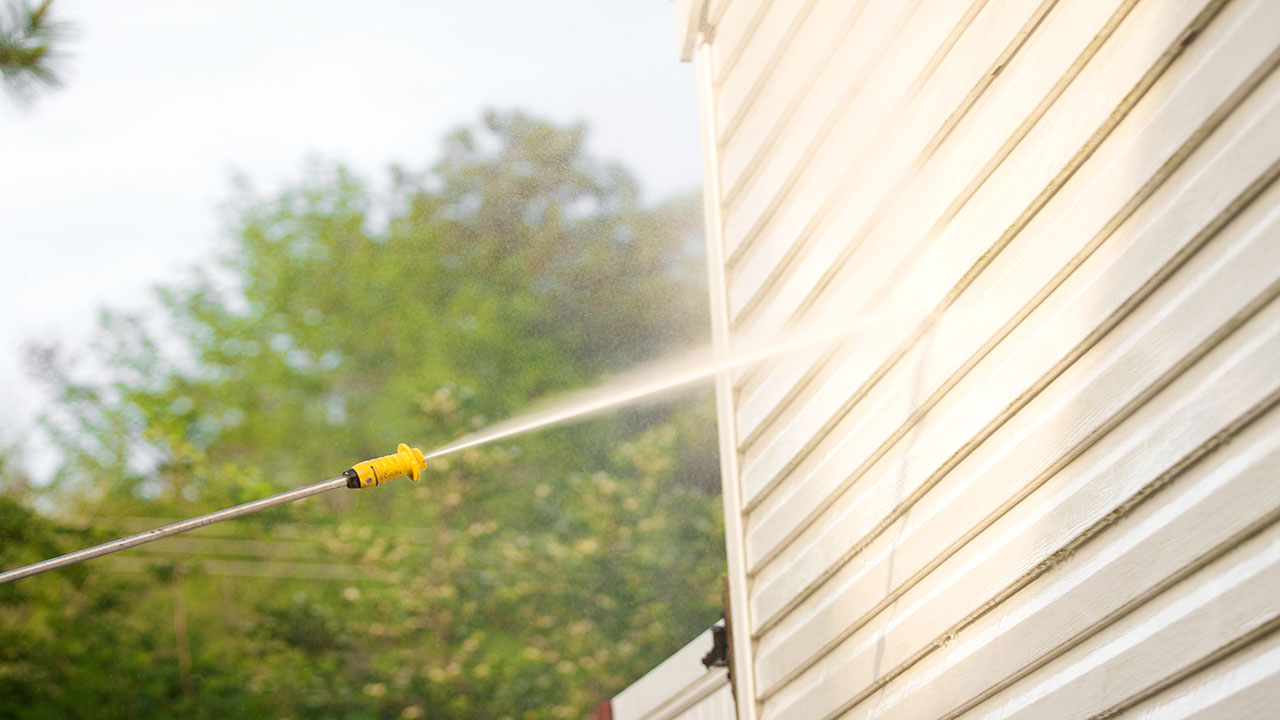
Your windows, walkways, driveway, porch, deck, siding, brick walls, and even your mailbox could probably use a good thorough wash before you plant your For Sale sign. If you have one (or can borrow one), take a pressure washer to the surfaces of your exterior. You’d be amazed at what a difference a few sprays can make.

Make Minor Repairs

Whether the gutters are a little bent, a light bulb is burned out, or a couple of bricks are crumbling, these little issues can be noticeable to buyers. If you have the know-how, make these repairs yourself. Or else, call a local handyman to make these updates for you.

Paint the Front Door

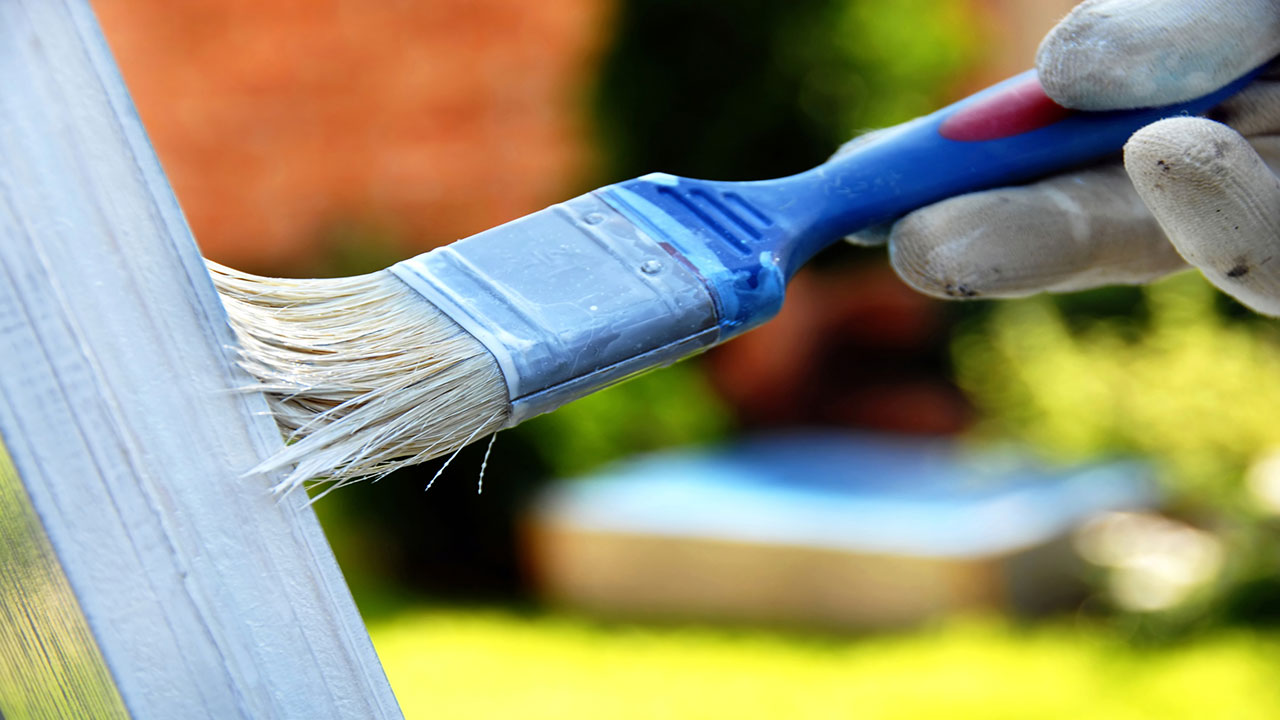
A can of paint will only cost you a few bucks, but a new coat of paint can make on your front door – and the overall look of your home’s exterior – will make it look like you’ve spent thousands. Choose a color that goes well with the rest of your home’s color scheme while making your home stand out, in a good way.

Install a New Door Knob

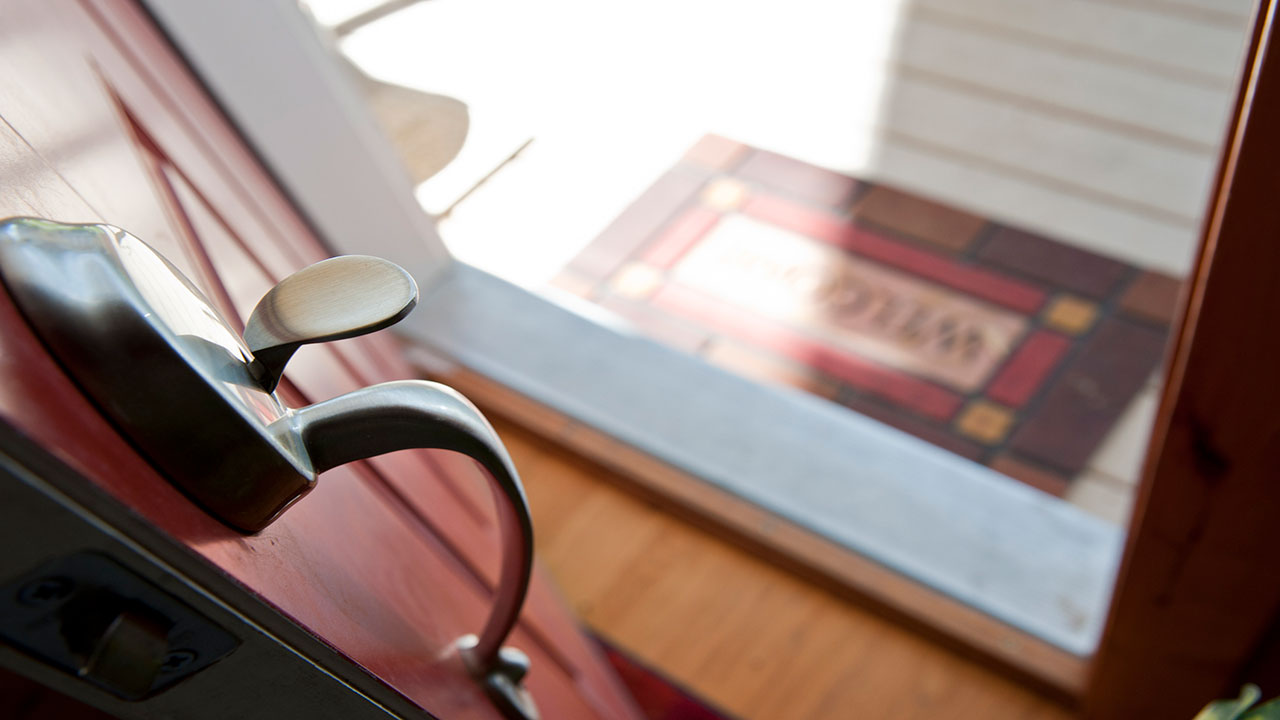
If the hardware on your front door is looking a little tired, change it up. It doesn’t cost much to buy yourself a new door handle, but such a seemingly subtle change can really update the look of your front door.

Add a Welcoming Doormat

Not only does a doormat with a cheerful slogan make guests (and buyers) feel welcome, it can also help to spruce up your home’s exterior.

Update Your Mailbox

Another seemingly insignificant exterior detail is your mailbox. If yours is getting up there in age – or at least looks like it is – consider either updating the one you have or swapping for a completely new one.

Install New House Numbers

You can quickly boost curb appeal with brand new house numbers, especially if the ones you have right now are old and worn out. Go for finishes that match well with any exterior lighting you may have.

Add Home-Made Shutters

While some shutters can be expensive to install, you can add faux shutters at a fraction of the price. And the home improvement store that you get them from will even cut them to size for you.

Edge Your Walkway

If your front yard has a walkway leading to the front door, spruce it up with some edging. You can literally choose from a myriad of materials to use for this job, including flowers, interlocking stones, or Riverstone to add some definition.

Cover Exposed Foundation

Many homes have a portion of their foundation exposed underneath their siding or brick. If that sounds like your home, cover up that exposed concrete with some easy-to-apply stone panels.

Trim and Weed Your Lawn

Probably the cheapest thing you can do to improve your lawn is to make sure the grass is trimmed and the weeds are plucked. Just be sure that you don’t let the grass or weeds overgrow while your home is on the market.

Plant Some Flowers

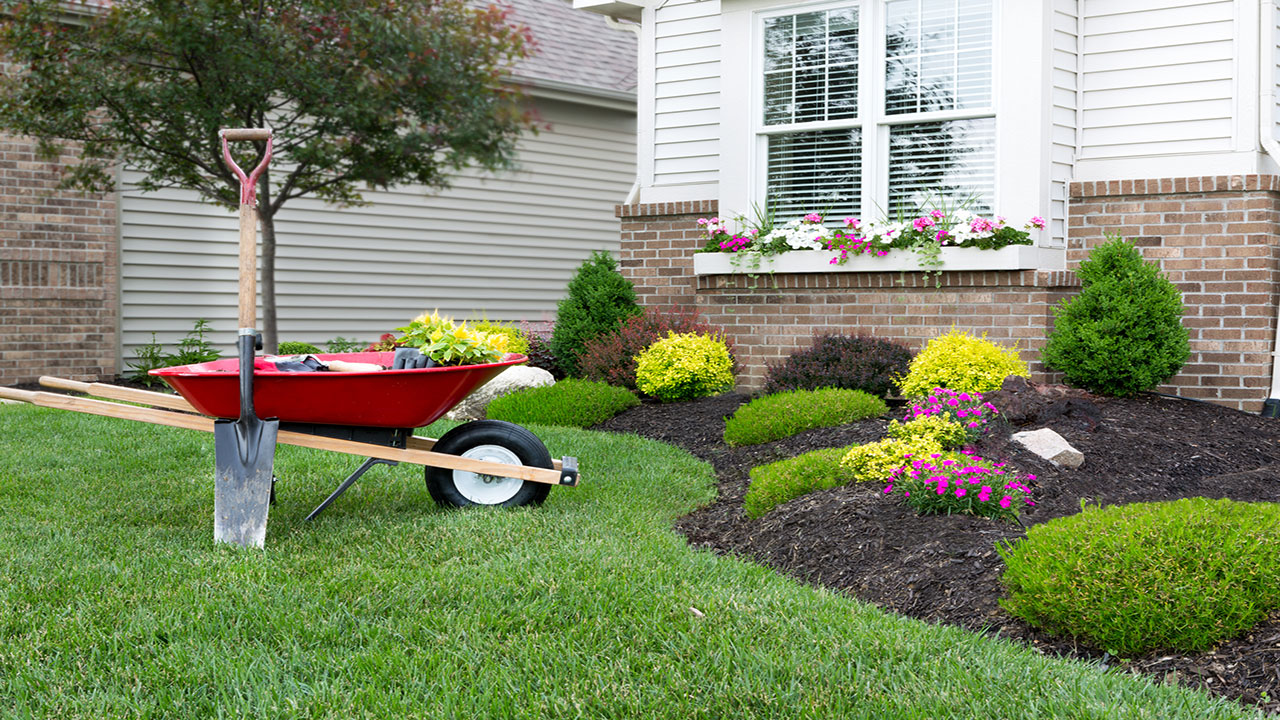
A common yet effective way to boost curb appeal is to add some colorful flower beds to your front lawn. They’re easy to plant and can be added in such a way to make your landscaping as unique as you’d like it to be.

Install Flower Boxes Under Windows

Don’t limit your flower planting to just the ground. Adding flower boxes under window sills can be an affordable way to add a pop of color to your home’s exterior.

Add Potted Plants

If you don’t feel like planting anything directly into the ground, you can still add plenty of natural beauty with potted plants.

Add Patio Furniture

If the space permits, consider adding a couple of outdoor patio chairs to flank your front door and spruce up your front entrance. If you really want to save some money, consider buying from a second-hand store, repainting the frame of the chairs, and adding your own cushions in a bright and cheerful color.

Update Exterior Lighting

Don’t underestimate the power of exterior lighting to curb appeal. If your lighting has seen better days, consider updating it. Even just a couple of exterior lights on either side of your front door or garage should do the trick.

The Bottom Line

Curb appeal plays an important role in the overall staging of your home. If you want to attract as many buyers as you can and get a decent offer quickly, boosting your curb appeal is a must. And with these ideas, you can make a huge difference in your home’s exterior with very little money.

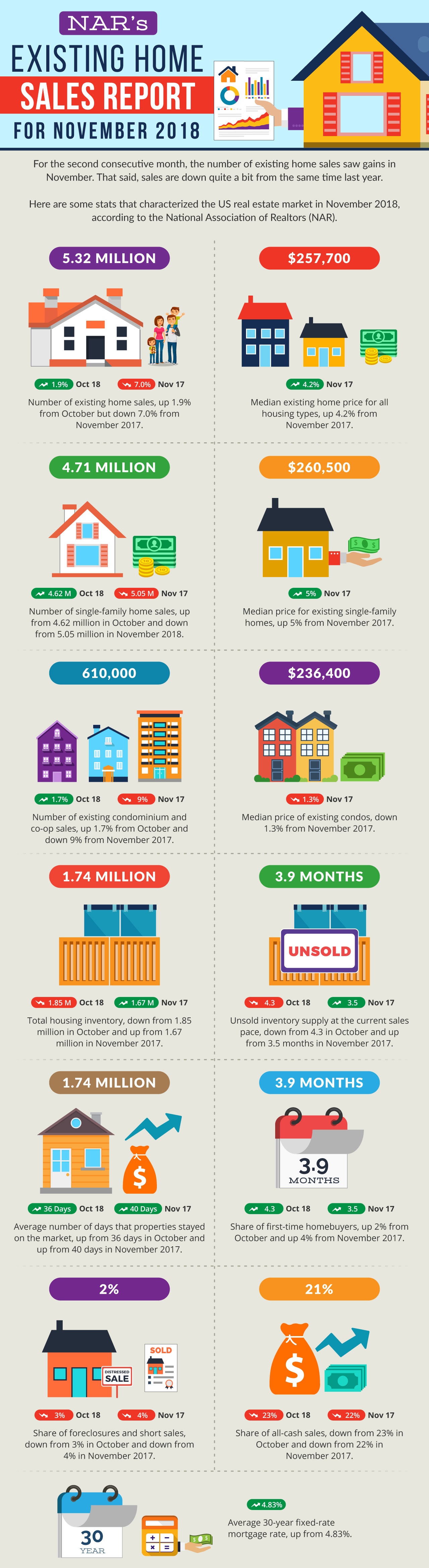
INFOGRAPHIC: NAR’s Existing Home Sales Report For November 2018